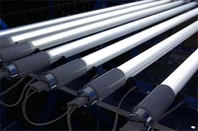
"Internal" power lithium battery
The media coverage appears to be lagging behind the battery companies' production expansion. While we are still discussing whether the global power lithium-ion battery production will be excessive in 2025, battery companies have already started a new round of production expansion. On December 8th, on the second battery day of Honeycomb Energy, the company, which was established less than four years ago, raised its target for the Nth time - challenging 600GWh of production and 450GWh of shipments in 2025. At the first Battery Day in 2020, it aimed to reach 40GWh of shipments in 2025.
Enquanto a Honeycomb Energy aumentou sua meta em 10 vezes em um ano, por outro lado, em 8 de dezembro, a CATL assinou um acordo de cooperação e investimento com o Governo Municipal de Suzhou; em 7 de dezembro, a LG, que ficou em segundo lugar no mundo, a New Energy também anunciou que planeja levantar dezenas de bilhões de dólares para abrir o capital... Impulsionadas por veículos de energia nova, as baterias de íon de lítio- se tornaram uma das faixas mais animadas deste ano. E como todas as pistas potenciais e competitivas, a involução é inevitável nesta indústria.
Production planning, another round of "go ahead"
There are two "famous" rumors in the battery industry: one is that Xiaopeng Motors CEO He Xiaopeng stayed in the Ningde era for a week in order to get the battery; the other is that there are at least seven "bosses" of OEMs in Ningde every day. The times stand guard. Although both He Xiaopeng and CATL denied the rumors in the end, the lack of battery supply is evident. So this year's power lithium-ion battery industry has a clear trend - expanding production has become one of the main themes.
A partir das estatísticas, não é difícil descobrir que desde o primeiro-nível CATL e BYD, até o segundo-nível Guoxuan Hi-Tech, Zhongxinhang (China Aviation Lithium), Honeycomb Energy, Yiwei Lithium Energy e, em seguida, para a terceira-tecnologia Funeng, Ruipu Energy, Xinwangda, etc., todos os principais fabricantes de baterias de lítio-de alimentação começaram a expansão da produção este ano. Mesmo independentemente da escala atual, quase todos estabeleceram uma meta ambiciosa de produção para 2025 este ano:
In addition to Honeycomb Energy's announcement that it will challenge 600GWh of production in 2025 and ship 450GWh, some institutions have previously predicted that its output in 2025 will also be about 600GWh according to the production plan of CATL;
A BYD tem notícias de que sua produção em 2025 pode chegar a 430GWh;
A Guoxuan Hi-Tech declarou em seu-relatório semestral que se esforçará para atingir uma escala de produção de 300 GWh em 2025;
Na reunião de anúncio da estratégia, a China Innovation Airlines afirmou claramente que a produção planejada em 2025 chegará a 500 GWh;
Liu Jincheng, presidente da Yiwei Lithium Energy, afirmou sem rodeios que a meta em 2025 é produzir 200 GWh de baterias de armazenamento de energia;
O plano de produção da Ruipu Energy em 2025 é de 200GWh;
Com a benção da Mercedes-Benz, a Funeng Technology também anunciou que sua meta de produção em 2025 deverá ultrapassar 120 GWh;
...
Desta forma, apenas nestas empresas, o plano de produção em 2025 já se aproxima dos 3000GWh.
Nas previsões da maioria das instituições de pesquisa, a demanda por baterias de íon de lítio-de energia em 2025 será de cerca de 1TWh. Em outras palavras, se o plano de produção atual for avançado, a superprodução de toda a indústria de baterias de íon de lítio- será inevitável. No entanto, no contexto da crescente demanda por baterias downstream, todas as empresas estão mais dispostas a acreditar que podem aproveitar o vento. Quanto à possibilidade de enfrentarem excesso de produção, todos demonstraram absoluta confiança.
Previously, Liu Jincheng, chairman of Yiwei Lithium Energy, once said that in the face of this risk, the company must continuously improve the quality and performance of its products. And Liu Jingyu, chairman of China Innovation Airlines, said bluntly, "As long as the company's technology passes the test, there will be no excess production." When the entire industry is in a frenzy, the competitors in the industry will inevitably fall into a strategic position of either advancing or retreating. In the head company to expand production, others can only be coerced forward. Otherwise, there will only be an outcome of being eliminated.
The competition for raw materials is as "crazy" as the land
At the end of October this year, Australian miner Cattlin released a set of data. The average price of lithium concentrate, an important raw material for power lithium-ion batteries, reached 1,650/ton in the fourth quarter, up 112 percent from 779/ton in the third quarter. This has never been the case before. Along with the expansion of production, the "mine grabbing war" in the upstream of the power lithium-ion battery industry is also in full swing.
Take lithium ore as an example. Since this raw material is highly dependent on imports, domestic battery manufacturers have gone overseas to buy lithium mines overseas with banknotes. Among them, I have to mention the "Ning Lithium War" between the Ningde era and Ganfeng Lithium Industry. When it initially planned to acquire Canadian lithium company Millennium Lithium, Ganfeng Lithium expected the transaction to be worth no more than C353 million.
But who knows that in September, the Ningde era crossed the bar and raised the price to 376.8 million Canadian dollars. In the end, Ganfeng Lithium, which was unwilling to give up, had to raise the price again to about 500 million Canadian dollars. In this regard, some people in the industry once sighed, "Now grabbing upstream lithium resources is just as fierce and crazy as the previous soil auction market."
Mudanças de preços de matérias-primas de carbonato de lítio em 2019-2021
Para obter mais recursos upstream, esses fabricantes de baterias que originalmente se concentravam na fabricação também tiveram que começar a aprender operações de capital e usar capital para investir na cadeia industrial para expandir sua voz na indústria. Em abril deste ano, a Honeycomb Energy estabeleceu oficialmente a Honeycomb Capital, gastando 2 bilhões de yuans para criar dois fundos para crescimento e inovação e para participar e controlar alguns fornecedores.
Coincidentemente, em setembro, a AVIC Lithium também investiu em uma empresa de capital, Kaibo (Hainan) Private Equity Fund Management Co., Ltd. O líder, Ningde Times, investiu e participou da criação de 8 fundos de investimento de private equity este ano, com mais de 40 investimentos estrangeiros. Pode-se dizer que a concorrência dos fabricantes de baterias de íon de lítio- não está mais limitada à tecnologia e produção. Mesmo as empresas dominantes devem ser proficientes em todos os oito tipos de artes marciais em todo o campo de negócios.
Da nomeação ao tempo de produção em massa, rota técnica, involução abrangente
Mesmo quando se trata de nomear as baterias, eles precisam saber exatamente o caminho certo.
Before the emergence of BYD's blade battery, people's cognition of the category of power lithium-ion batteries mostly stayed on ternary lithium-ion batteries and lithium iron phosphate batteries. After BYD's blade battery became well-known with its technical strength and simple image, the naming of power lithium-ion batteries even began to be rolled out.
From the sodium-ion batteries of the Ningde era to the short-knife batteries of Honeycomb Energy, even car companies have come to join in the fun. GAC's magazine battery, Great Wall's Dayu battery, Lantu's amber battery, Zhiji's silicon-doped lithium-ion battery... Some of these are new names brought by new technologies, and some are trying to use simple and easy-to-remember names. To package and summarize your selling point, so that people can quickly remember.
As a result, today's power lithium-ion battery industry has become like the automotive industry. "A good name is not everything, but no good name is absolutely impossible." Even the involution of this marketing continues to who can mass-produce solid-state batteries first. In recent years, solid-state batteries have gradually been recognized as the next-generation battery technology solution that could disrupt the entire automotive industry. Therefore, in order to attract the attention of consumers, battery companies and car companies have recently begun to announce the mass production time of solid-state batteries to the outside world. And the first of them is Weilai.
No final do ano passado, Weilai anunciou uma bateria de-estado sólido de 150 kWh na NIODay, dizendo que a bateria de-estado sólido pode atingir uma densidade de energia ultra-alta de 360Wh/kg. O sedã NIO ET7 equipado com esta bateria terá autonomia de mais de 1,000 quilômetro, e o produto está programado para ser entregue no quarto trimestre de 2022. Mas depois que essa notícia foi anunciada, atraiu uma muitas dúvidas. Muitos profissionais disseram que, de acordo com a tecnologia atual, baterias de-estado sólido não podem ser produzidas em massa-para veículos elétricos.
Zeng Yuqun, presidente do Ningde Times, chegou a admitir que em 3 a 5 anos, todas as baterias-de estado sólido que podem ser usadas em carros não serão todas-baterias de estado-sólido. Se Wei Lai vai levar um tapa na cara ou vai provar a si mesmo, e dar tempo. No entanto, para aumentar a competitividade de seus novos modelos de energia, algumas empresas automobilísticas nacionais e estrangeiras não apenas cooperam com fornecedores de baterias em joint ventures, mas também desenvolvem pessoalmente sua própria tecnologia de baterias e constroem suas próprias fábricas de baterias, o que é uma tendência sólida. .
Earlier, Zeng Qinghong, chairman of GAC Group, once mentioned, "The global auto industry has already started the battle for battery talent, and GAC poached some core talents from LG, Samsung, and Japan's Yuasa five years ago. ". Through independent research and development in the past few years, GAC has indeed made good progress in super-speed batteries and sponge silicon anode sheet batteries.
No entanto, ao mesmo tempo em que desafia constantemente a difícil tecnologia de baterias de -íon de lítio líquido, a fim de aumentar as futuras barganhas, muitas montadoras também estão adotando caminhos de bateria diversificados. Tomando o GAC Group como exemplo, de acordo com Zeng Qinghong, eles vão acelerar o desenvolvimento de baterias de lítio movidas a combustível de hidrogênio- e baterias de estado sólido-.
escreva no final
Not long ago, SNEResearch, a South Korean market research institution, announced the global power lithium-ion battery installed capacity rankings for October and January-October 2021. The data shows that in the ranking TOP10, Chinese companies occupy 6 seats. At the same time, CATL has a market share of 34.2 percent , which is far ahead of the three Korean giants LG New Energy, SK Innovation, Samsung SDI, and Japan's Panasonic.
However, in recent days, Ouyang Minggao, academician of the Chinese Academy of Sciences and vice chairman of the my country Electric Vehicle Hundred People's Association, said in an interview that although my country is currently in an absolute leading position in the supply of automotive power lithium-ion batteries, it is still in solid-state batteries. In the field, it will take at least five years for my country to catch up with Japan. For domestic battery companies, while competing with each other, don't forget to look up and look further ahead.
Algumas referências de informações:
Voting China.com "Really The Most Inward Rolling Track in History, 350 Billion in Half a Year, 7 Bosses Are Rumored to "Squat and Take Goods""
Die Zeit "Fairy Fights! The Ningde era and Ganfeng Lithium rushed to buy lithium mines overseas, as crazy as the previous local auctions"
autocarweekly "The hardest part of making a battery is naming it"
Yicai "Car companies get together to bet on solid-state batteries, what are the chances of winning this technical route? express